


Introduction to the principle of electric hoist
Publication Time:
2022-12-05
Author:
Source:
With electric hoist The widespread use of electric hoists and the continuous improvement of current mechanical design, innovation is the source of technological development and an important asset for enterprises in fierce competition. Innovation is a "posture." We always maintain this posture, constantly improving the technical level and quality level of our products, discovering customer needs, and meeting customer needs. Different mechanical designs have different working principles.
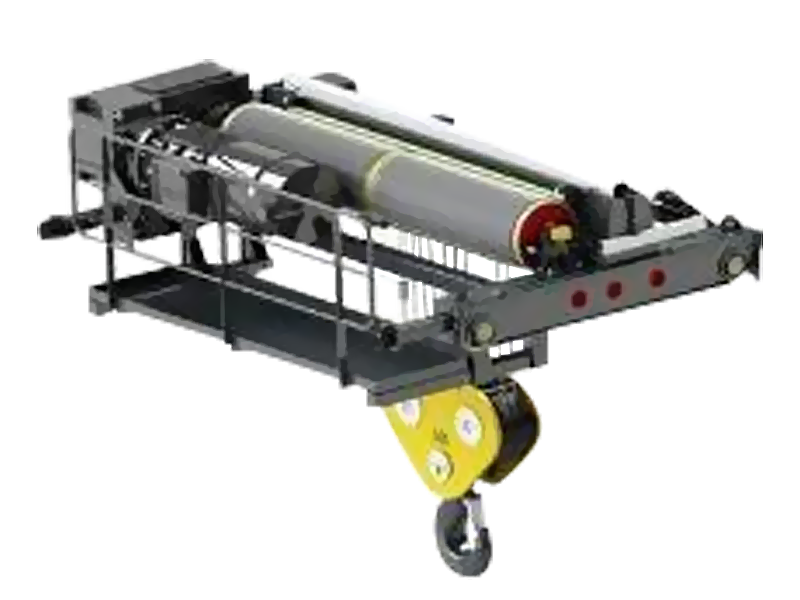
As can be seen from the electric hoist, the running trolley has a relatively low traveling speed and generally does not have a braking mechanism. When the trolley is running, in order to prevent the heavy object from falling, an electromagnetic brake is installed on the lifting mechanism. However, in the initial stage of startup, the main internal principle lies in the following startup steps: From the moment the electric hoist is energized, the internal working principle is: the process of the rotor speed rising from zero to the rated value. According to the characteristics of the DC electric hoist, its starting methods generally include full-voltage starting, series resistor starting, and reduced-voltage starting. When the armature winding is energized, its current rises rapidly, generating a starting counter, driving the rotor to rotate, and generating a counter electromotive force. As the rotor speed increases, the counter electromotive force increases, the armature current decreases, the starting counter decreases, and the rotor speed slowly increases. When the starting counter is equal to the load counter, the speed zone is stable, and the starting is complete. The above is the starting process of the electric hoist.
For a mechanical line, there is a running cycle and time, which is not suitable for long-term operation. Long-term operation will cause mechanical damage, which can lead to serious accidents. However, in general operation, if the surface temperature of the electric hoist is too high, what is the impact on the machinery? At the same time, if a machine only has an excessively high temperature, how to take timely measures to deal with the machine, we need to check what is the reason? Immediately check electric hoist whether the lifting weight is too large, exceeding the rated lifting weight of the electric hoist. Overloading will cause the motor to overheat, and long-term overloading of the electric hoist will cause irreparable damage to the hoist. If the motor is not overloaded but still heats up, check whether the motor bearings are damaged; you should also check whether the motor is operating according to the specified operating system, which is also one of the reasons for motor heating. During use, it should operate strictly according to the motor operating system.
When the motor of the electric hoist is running, if the brake clearance is too small and the brake does not fully disengage, the friction is very large. Frictional heat will also increase the additional load, thereby reducing the motor speed. At this time, we should let the electric hoist rest until the hoist cools down. Before putting it into use, readjust the brake clearance. When using the electric hoist, pay attention to the abnormal reactions of the electric hoist to avoid injury and protect the hoist.
Recommended News
Analysis of various application scenarios and advantages of electric hoists
2025-01-13
2025-01-02
2024-12-23
Contact Information
Mr. Tang +86-13168489951
No. 8, Fuguang Huanwei Street, Qingxi Town, Dongguan City, Guangdong Province

TDHAFU CRANES

Mobile Website