


Precautions for using electric hoist
Publication Time:
2022-12-14
Author:
Source:
Electric Hoist It is a special type of lifting equipment installed on overhead cranes and gantry cranes. Electric hoists are characterized by their small size, light weight, simple operation, and ease of use, and are used in industrial and mining enterprises, warehouses, docks, and other places. Electric hoists have a compact structure, and those with motor shafts perpendicular to the drum shafts use worm gear transmission devices. Their disadvantages include: large length, large width, clumsy structure, low mechanical efficiency, and difficult processing. The hydraulic system is dual-controlled, and the overflow control valve and magnetic contact pressure gauge can precisely control the pressure. The electrical control part uses low-voltage control, increasing the safety of the control system.
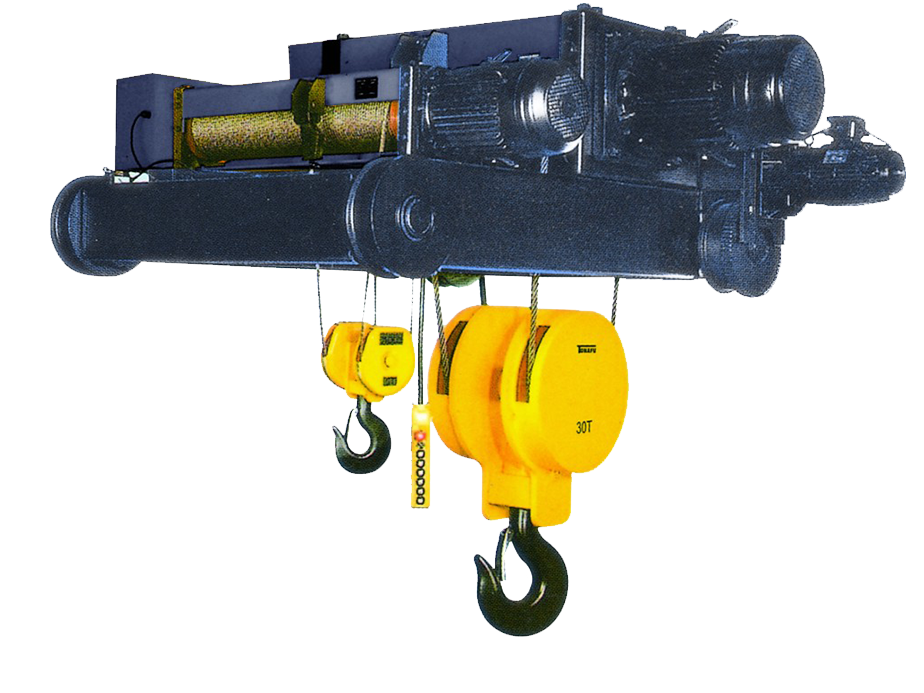
Main Features of Electric Hoists
Structure and Features of Electric Wire Rope Hoists: This machine adopts a mechatronics design. By changing different molds, it can press steel wire ropes of different specifications. The control is simple and safe; it is convenient for inspection, installation, and maintenance of the motor. Its main disadvantages are poor motor heat dissipation, poor grouping, complex power supply device, and difficult manufacturing and assembly.
Classification and Description of Wire Rope Electric Hoists: The components of a wire rope electric hoist include: motor, transmission mechanism, drum, and sprocket. Depending on the location, the motor and winding wheel can be roughly divided into four types. The pressed wire ropes have high tension, beautiful appearance, and high speed. Pressing a set of wire ropes only takes a few minutes, greatly reducing labor intensity and improving work efficiency.
Electric hoists with motors mounted outside the drum have advantages such as good grouping, high degree of generalization, easy change of lifting height, and convenient equipment inspection.
Electric hoists are widely used, but few professionals can operate them correctly. It is recommended that you learn more about electric hoists to better use various electric hoists in various fields.
Use Electric Hoist Precautions
1. Operators must undergo professional training, receive safety technology training, and pass examinations by national or industry departments to obtain special operation certificates issued by the local competent authorities before they can engage in command and operation work.
2. Before using the electric hoist, check the safety technical condition of easily damaged parts such as hooks, wire ropes, and reducers.
3. When using the electric hoist, prohibit idle personnel from entering the dangerous area for lifting, and assign a dedicated person to supervise.
4. When lifting with an electric hoist, the placement and bundling of items must be standardized and meet the requirements of the lifting regulations.
5. Lifting operations are prohibited when the brakes and safety devices fail, the hook nut locking device is damaged, or the wire rope is damaged to the point of scrapping.
6. Lifting operations must not be carried out if the lifted object is loosely bound or hung, unbalanced and may slide, or if there are no shims between the corners of the lifted object and the wire rope.
7. Lifting operations must not be carried out if the site, the lifted object, and the command signals cannot be clearly seen.
8. When stopping work or resting, do not leave the lifted object, basket, sling, and cable hanging in the air.
9. When the lifting machinery is working, it is forbidden to inspect and repair the lifting machinery. Do not adjust the brake of the lifting mechanism under load.
10. When lowering the lifted object, strictly prohibit free falling (sliding). Do not stop under the condition of the limit position limiter.
Recommended News
Analysis of various application scenarios and advantages of electric hoists
2025-01-13
2025-01-02
2024-12-23
Contact Information
Mr. Tang +86-13168489951
No. 8, Fuguang Huanwei Street, Qingxi Town, Dongguan City, Guangdong Province

TDHAFU CRANES

Mobile Website