


Introduction to the Use of Electric Hoist Bridge Cranes
Publication Time:
2022-09-26
Author:
Source:
About Electric Hoist Bridge Crane Let's learn about the wiring and safety management issues.
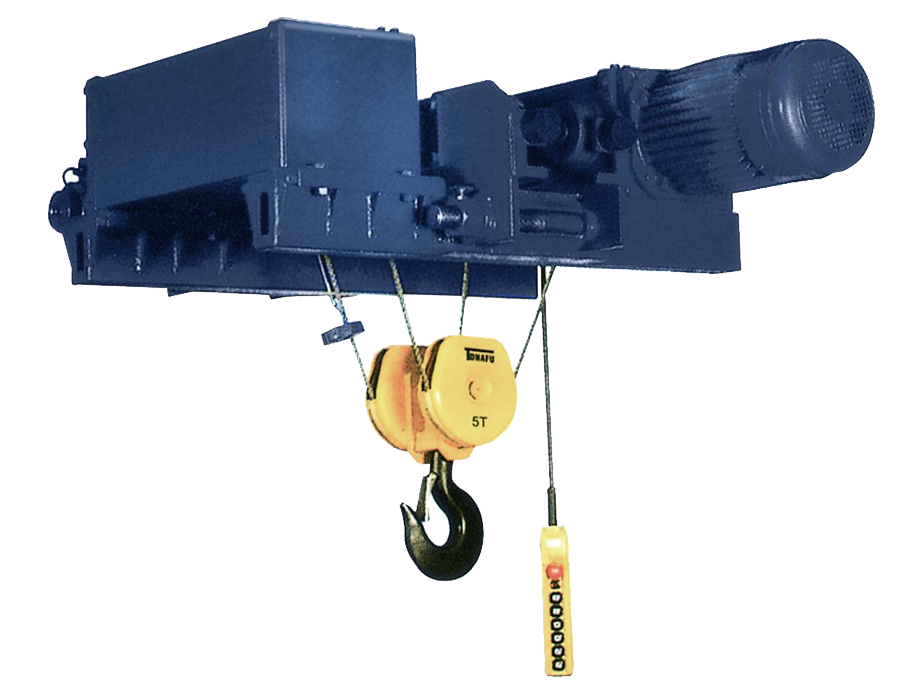
An electric hoist bridge crane is actually a type of crane equipment. It is generally installed on an overhead crane or gantry crane. This equipment is lightweight, small in size, and very convenient to use. Let's talk about the wiring issues of electric hoist bridge cranes.
How to connect correctly Electric Hoist Bridge Crane ?
1. First, use a multimeter to measure the resistance. Among the three wires coming out of the electric hoist motor, one is the common ground wire, and the other two are the input wires of the windings. (If the main and auxiliary windings are not separated, the input resistance of the two windings is the same as the resistance of the common end wire; if the main and auxiliary windings are separated, the resistance of the main winding and the common end is greater than the resistance of the auxiliary winding and the common end).
2. Identify the main winding and the auxiliary winding. Check the number of wires in the electric hoist motor. If the main and auxiliary windings are separated, bidirectional rotation is required, and the number of wires coming out of the motor must be at least 4. If it is 3, it can be determined that the main and auxiliary windings are not separated.
3. The wiring of the electric hoist mainly involves the operation of the hoist body and the handle. There are usually six buttons on the operating handle, namely red, green, and four directional keys. There are sub-row terminals on the winch, which is the place where the winch body and the handle are connected. According to the color of the corresponding wires, wiring can be done.
Electric Hoist Bridge Crane Safety Management
1. The installation of the electric hoist shall be handled by the corresponding installation licensed unit; before construction, the safety supervision department shall handle the filing procedures as required. No department shall install it without authorization.
2. For installed and used electric hoists, the user and manager shall be clearly identified and registered with signatures, and files shall be established for future reference.
3. Management personnel shall clearly define the installation location of the equipment, the operators, their safety and usage methods, and shall be responsible for formulating relevant management systems and safe technical operating procedures.
4. Establish file records. The records include technical files and operation management files. Technical files should include the following content: manufacturing unit, product quality certificate, operation and maintenance manual, installation technical documents and materials, etc. Operation management files include: regular inspection and self-inspection records, daily usage records (operation records), daily maintenance records of safety accessories and safety protection devices, operation failures and accident records, etc. The archivist shall strictly follow the regulations and handle borrowing and reading approval procedures.
Operation-related precautions:
1. All levels of management personnel in the special equipment usage department should possess relevant safety knowledge of electric hoists. Strengthen on-site safety management during usage.
2. Before operators take up their posts, they should receive relevant operation training and safety knowledge education. Strictly follow the operating procedures and relevant safety regulations, conduct pre-operation inspections, and promptly handle any abnormalities found. Operation of the equipment is strictly prohibited without inspection. Issues that cannot be handled immediately should be promptly reported to the leadership, and professional technicians should be organized to investigate the fault, and the faulty equipment should be repaired according to the investigation results. It is strictly forbidden to forcibly energize the equipment when the fault is unclear.
3. According to the equipment usage situation, regular (at least once a month) safety inspections and patrols should be organized, and records should be kept. Safety management personnel of various departments should regularly check their usage (no less than twice a month), and any problems or abnormal situations should be handled immediately.
Recommended News
Analysis of various application scenarios and advantages of electric hoists
2025-01-13
2025-01-02
2024-12-23
Contact Information
Mr. Tang +86-13168489951
No. 8, Fuguang Huanwei Street, Qingxi Town, Dongguan City, Guangdong Province

TDHAFU CRANES

Mobile Website