


Relevant fault problems of electric hoist bridge cranes
Publication Time:
2022-09-16
Author:
Source:
Electric hoist bridge crane It is divided into wire rope electric hoists, electric chain hoists and explosion-proof electric hoists. It is a light and small lifting equipment, widely used in various industries. It is generally installed on single-beam cranes, bridge cranes, gantry cranes and overhead cranes. With slight modifications, it can also be used as a winch. The following are the relevant fault problems and handling methods of electric hoist bridge cranes.
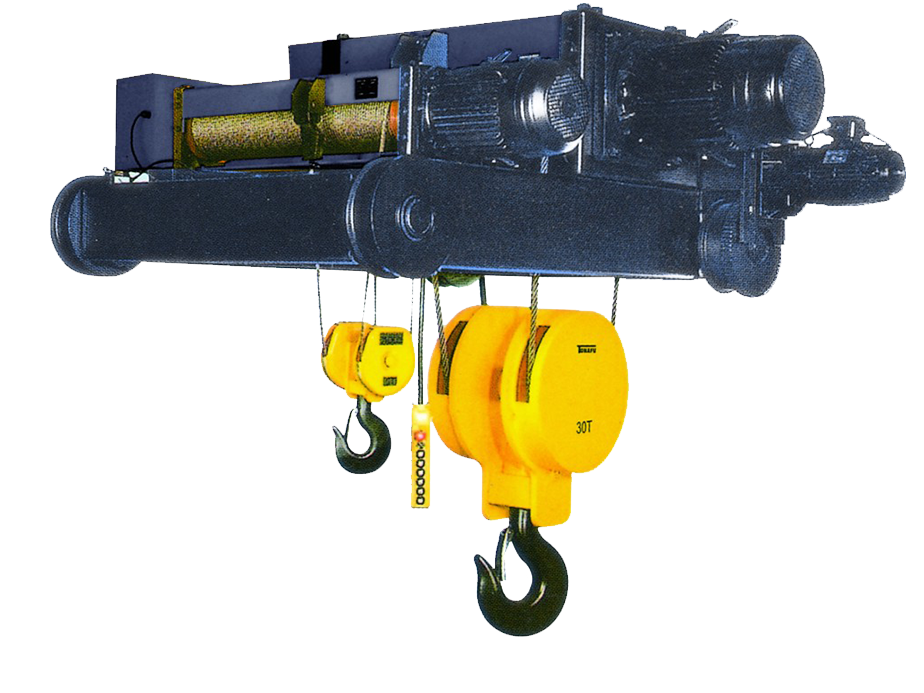
Electric hoist bridge crane fault problems:
1. Abnormal noise will produce a "buzzing" sound in the control circuit. Generally, there is a fault in the contactor (poor contact of the AC contactor, inconsistent voltage level, magnetic core stuck, etc.). The faulty contactor should be repaired. If it cannot be repaired, it needs to be replaced, and the noise will disappear by itself.
2. When the motor makes a strange noise, stop running immediately. Then, check each part of the motor for signs of damage. Whether the motor is running on a single phase, or the bearing is damaged, or the axis is misaligned, it will basically cause different noises. When the motor is running on a single phase, the whole motor will make a regular "buzzing" sound, sometimes strong and sometimes weak. On the other hand, when the bearing is damaged, there will be a "clattering" and "buzzing" sound around the bearing, while when the coupling shaft is misaligned or the motor is slightly rubbing, the whole motor will make a high "buzzing" sound, accompanied by a sharp and harsh sound. Generally speaking, the fault should be found according to the different noises, repaired one by one, and the normal function of the motor should be restored. When the motor fault is not handled, we cannot use the electric hoist.
3. The abnormal sound comes from the reducer, reducer failure (such as lack of lubricating oil in the reducer or bearing, gear wear or damage, bearing damage, etc.). At this time, stop the machine and check whether the reducer or bearing is lubricated before use and whether the lubricating oil can be replaced regularly during use. If it is not lubricated as required, the reducer will not only make a "buzzing" sound, but also excessively wear or damage the gears and bearings.
Electric hoist bridge crane The following precautions should be followed:
1. Overloading is prohibited. When using explosion-proof electric hoists, overloading is prohibited. This has been mentioned many times, but it still needs special attention. However, some people still want to use electric hoists for lifting operations in order to save time and complete the work faster. Overloading will not only damage the internal parts and structure of the explosion-proof hoist, but also damage all parts to a certain extent. Special note: No lifting equipment can be overloaded.
2. Non-professionals are prohibited from operating explosion-proof cranes. The operation of explosion-proof electric hoists is not something everyone can do. Find a professional who understands the principle of explosion-proof hoists to operate the explosion-proof hoist.
3. It is prohibited to develop the bad habit of not checking the operator before use. Before each use of the explosion-proof crane, check to ensure that all parts of the explosion-proof crane and the lifting and braking aspects are normal before lifting.
4. When the explosion-proof electric hoist is running, it is strictly forbidden for personnel to walk or stay around the lifted object. As we all know, it is forbidden for anyone to move around the hoisting operation to avoid any loss and injury to the hoisting operation.
Recommended News
Analysis of various application scenarios and advantages of electric hoists
2025-01-13
2025-01-02
2024-12-23
Contact Information
Mr. Tang +86-13168489951
No. 8, Fuguang Huanwei Street, Qingxi Town, Dongguan City, Guangdong Province

TDHAFU CRANES

Mobile Website