


Key points for using bridge cranes, explained by an electric hoist bridge crane manufacturer
Publication Time:
2022-04-24
Author:
Source:
Electric Hoist Bridge Crane Manufacturers consider bridge cranes a type of mechanical equipment, often called "overhead cranes" or "gantry cranes," horizontally installed above workshops, warehouses, and open-air stockyards for lifting various objects. It's widely used in mechanical, metallurgical, and chemical industries. So what precautions should be taken during operation?
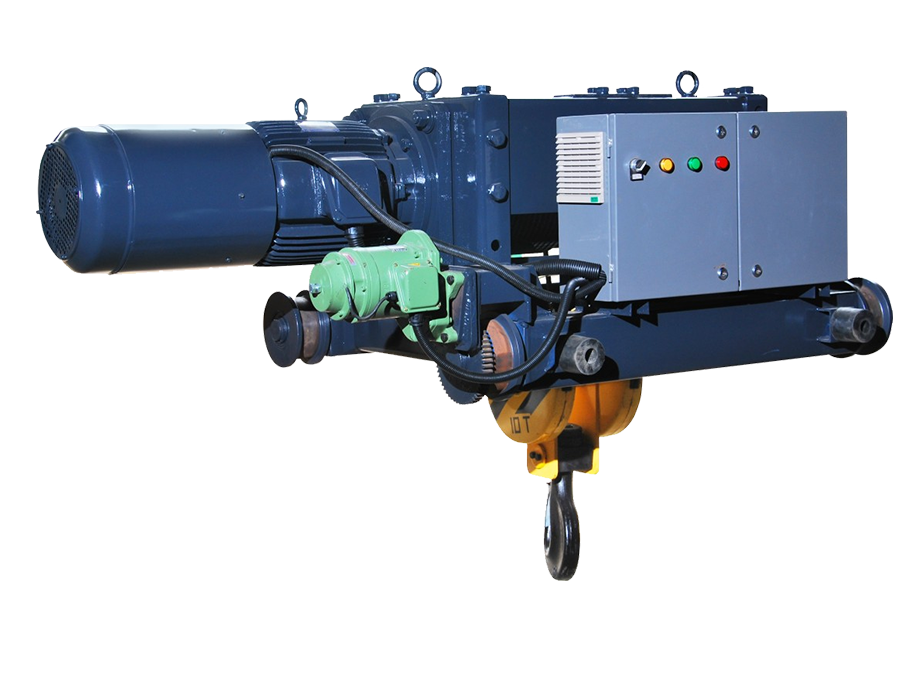
Electric hoist bridge crane manufacturers believe that in modern industrial enterprises, it is one of the important pieces of equipment for achieving mechanization and automation of the production process, reducing heavy manual labor, and improving production efficiency. When using a bridge crane, the following safety precautions should be observed:
1. The crane is in normal operating condition, especially safety devices such as braking mechanisms, audio-visual signals, and interlocking devices, which should be sensitive and in good condition.
2. During operation, the operator should concentrate and perform a test run before lifting. If the lifted object is found to be insecurely bound, it should be re-bound. Ring the bell before starting; the crane must not exceed overhead limits. Repair, inspection, refueling, and wiping of parts are prohibited while the crane is starting. If any malfunction is detected during operation, stop immediately.
3. Electric Hoist Bridge Crane Manufacturers suggest that at the end of work, the crane should be stopped on the parking line, the hook raised into position, and no heavy objects should be suspended from the hook. All controllers and levers should be set to zero, the power switch unplugged, and the cab door locked.
4. Bridge cranes are equipped with reliable and sensitive safety devices. Generally, they are equipped with buffers, limiters (travel limiters, lifting limiters), lifting limiters, and wind-proof rail clamps, etc.
5. The outer casings of all energized components of the crane should be reliably grounded to prevent accidental electric shock to operators. When the trolley track is not welded to the main beam, it should also be grounded by welding, and the step-down transformer should be grounded on the low-voltage side as per regulations.
Electric hoist bridge crane manufacturers believe that because the two ends of the bridge crane are located on tall concrete columns or metal track beams, it resembles a bridge (overpass). The bridge frame of the bridge crane (overhead crane) runs longitudinally along the tracks laid on both sides of the overhead structure, allowing for full utilization of the space under the bridge frame for material handling without obstruction from ground equipment. It is a widely used and numerous type of crane, and also a large piece of equipment frequently used for lifting heavy objects in factories.
Electric Hoist Bridge Crane Manufacturers believe that the bridge frame of the bridge crane runs longitudinally along the tracks laid on both sides of the overhead structure, and the crane trolley runs transversely along the tracks laid on the bridge frame, forming a rectangular working range that allows for full utilization of the space under the bridge frame for material handling without obstruction from ground equipment. This type of crane is widely used in indoor and outdoor warehouses, factories, docks, and open-air stockyards. Bridge cranes (overhead cranes) are important tools and equipment for achieving mechanization and automation in modern industrial production and lifting and transportation. Therefore, bridge cranes are widely used in indoor and outdoor industrial and mining enterprises, iron and steel chemical industry, railway transportation, ports and docks, logistics turnover, and other departments and places.
Recommended News
Analysis of various application scenarios and advantages of electric hoists
2025-01-13
2025-01-02
2024-12-23
Contact Information
Mr. Tang +86-13168489951
No. 8, Fuguang Huanwei Street, Qingxi Town, Dongguan City, Guangdong Province

TDHAFU CRANES

Mobile Website