


What are the specifications and models of electric hoists?
Publication Time:
2021-10-28
Author:
Source:
Electric hoist What are the specifications and models? Rated lifting weight 500 kg ~ 80 tons, lifting height 1 m ~ 100 m, according to the structure can be divided into ordinary electric hoist and non-standard electric hoist. Standard lifting speed is 8m/min, running speed is 20m/min.
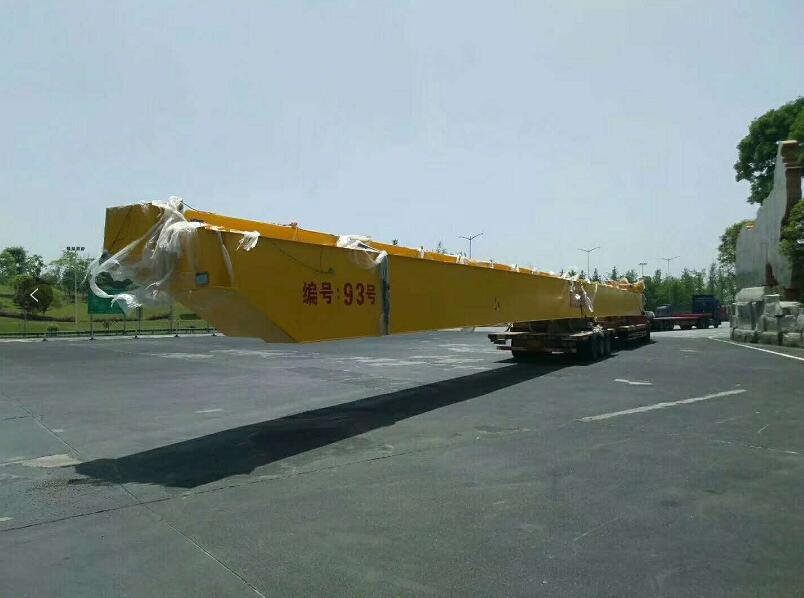
There are two installation methods: fixed installation and running installation. It can be used alone or installed on straight and curved I-beam tracks. It can also be used with various single-beam cranes, jib cranes, double-beam cranes, gantry cranes, bridge cranes, and gantry cranes, with a wide range of applications. Electric wire rope hoists include: CD1 single-speed type, MD1 double-speed type, BCD explosion-proof type and extended type.
1. The working grade of the electric hoist is M3, the rated voltage is 380v, the power load rate is 25%, the cycle is 10 minutes, it belongs to intermittent operation, also known as repeated short-time working system. The lifting speed of single-row single-wheel hook is 8m/min, and the sheave ratio is 1/2; the lifting speed of double-row double-wheel is 4m/min, and the sheave ratio is 2/4. The electric hoist can be installed with a wireless remote control.
2. Electric hoist It is an upgraded version of the CD1 single-speed electric hoist, which has the characteristics of the electric hoist and adds a lifting speed, that is, the electric hoist has two lifting speeds: constant speed (8m/min) and slow speed (0.8m/min), stable and accurate, suitable for precision processing industry. It can meet the requirements of precision loading and unloading, sand box molding, machine tool maintenance and other fine operations, and is suitable for -20℃ ~ +40℃ operation.
3. The explosion-proof grades of the electric hoist are DIIBT4 and DIICT4 respectively. It can be installed on I-beam tracks for straight or curved operations. It can be used with explosion-proof single-beam suspension cranes or explosion-proof single-beam and double-beam bridge cranes according to different requirements. It can also be fixed on the bracket for direct use. The electric hoist is suitable for flammable and explosive operation sites (such as power plants, pharmaceutical factories, chemical plants, etc.) containing combustible gases and easily producing sparks.
Recommended News
Analysis of various application scenarios and advantages of electric hoists
2025-01-13
2025-01-02
2024-12-23
Contact Information
Mr. Tang +86-13168489951
No. 8, Fuguang Huanwei Street, Qingxi Town, Dongguan City, Guangdong Province

TDHAFU CRANES

Mobile Website