


What are the explosion-proof characteristics of an explosion-proof electric hoist?
Publication Time:
2022-01-10
Author:
Source:
Explosion-proof electric hoist It is explosion-proof lifting equipment designed according to explosion-proof standards. It is mainly made of bronze material, and the explosion-proof components are made of special spark-free materials. It is a mechanical equipment produced to improve working conditions and labor productivity while ensuring safety when the factory is filled with explosive mixtures. The characteristics are described below:
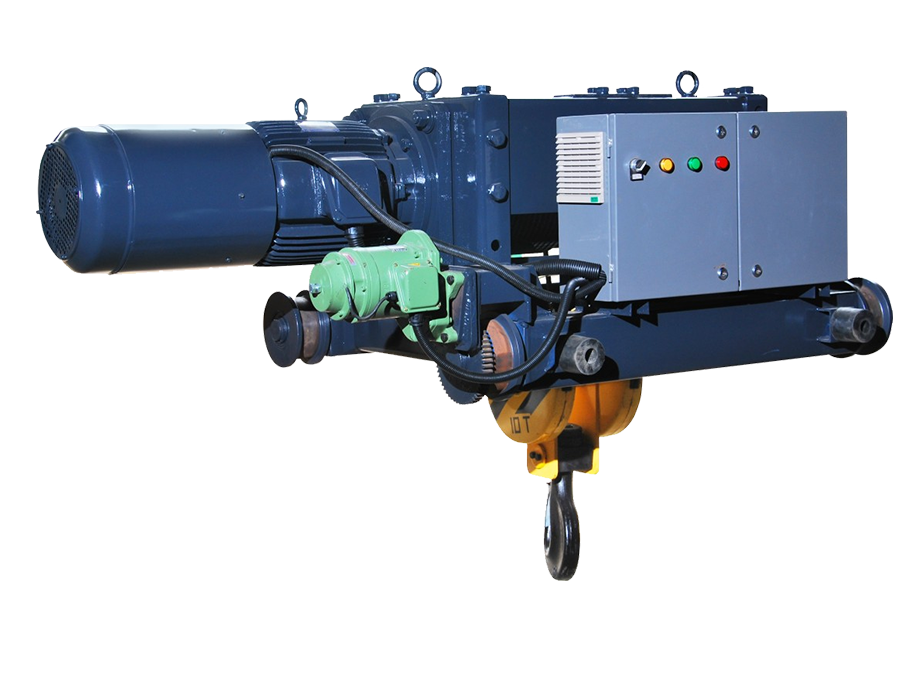
1. The gas is made of lead die-casting molds, which makes the gas of the explosion-proof electric hoist lighter. The surface of the body is coated with 80 mm thick double-layer epoxy polyester paint to prevent various corrosive substances.
2. The hoist motor is a copper-specific motor that meets the ATEX standard. The motor heating efficiency is increased by 30%, and the brake adopts a maintenance-free design, making maintenance very convenient.
3. The electrical control box uses standard plug-ins integrated into the same circuit board, with an IP55 protection level, making maintenance more convenient.
4. The crane chain has 5~6 chain grooves pre-processed for each chain groove, one-time molding, and strict correction.
5. Compact gearbox structure design, long service life, low noise.
Widely used in low-height occasions and environments with dust, moisture, and decaying gases. The electric hoist with an explosion-proof shell becomes Explosion-proof electric hoist ,The shell can withstand the explosion pressure of explosive gas mixtures and prevent the explosive gas mixtures from spreading to the surrounding area outside the shell. Heat spreads rapidly from the burning material to the unburned material. Through the pipeline flame combustion experiment, it was found that the heat of the product is not only transferred to the unburned mixture but also to the pipe wall. Part of the heat is lost through the pipe wall, so the burning speed near the pipe wall slows down, and the normal speed is almost zero.
Explosion-proof principle: During operation, the explosion-proof electric hoist will generate conduction and mechanical friction, sometimes producing arcs, sparks, and overheating phenomena. Therefore, explosion-proof electric hoists used in flammable and explosive places must take measures to prevent the occurrence of arcs, sparks, or overheating, and even if they occur, they cannot ignite the surrounding explosive mixtures.
When designing explosion-proof electric hoists, the entire mechanical equipment, metal structure, appliances and components, explosion-proof electrical component connections, mechanical or hydraulic transmission, and safety devices composed of explosion-proof electrical equipment.
When the pipe diameter is reduced to a certain extent, the flame propagation speed drops to 0. This is the principle of pipeline fire extinguishing, and this diameter is the critical diameter. Through explosion-proof testing, the explosion-proof principle has been successfully applied to the explosion-proof structure of the electric hoist. Under specific initial temperature and pressure, various explosive mixtures have their own explosive concentrations, usually expressed as volume percentage. It is divided into upper limit concentration and lower limit concentration, and there is an explosion hazard between the two. The lower limit concentration is the initial condition of the explosion hazard. Therefore, Explosion-proof electric hoist The explosion-proof requirements must not only consider the high temperature and sparks generated by single explosion-proof electrical equipment but also the mechanical sparks and friction and impact generated by mechanical moving parts.
Recommended News
Analysis of various application scenarios and advantages of electric hoists
2025-01-13
2025-01-02
2024-12-23
Contact Information
Mr. Tang +86-13168489951
No. 8, Fuguang Huanwei Street, Qingxi Town, Dongguan City, Guangdong Province

TDHAFU CRANES

Mobile Website